

The Signs That Your Brakes Need Checking and Should Not Be Put Off
Noise when braking‚ a vibrating pedal‚ longer stopping distances and a warning light are signs that your brakes need checking without delay.
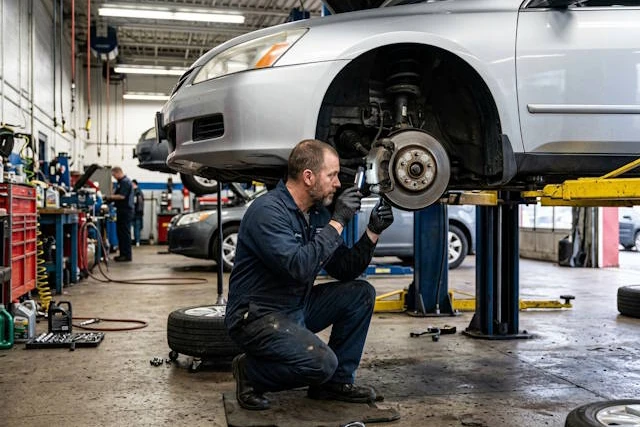
When drivers ignore signs that appear while driving‚ the problem can gradually get worse and affect the car's braking performance. The brake system is made up of several components that work together to create the stopping force needed while driving. When one of the components wears out or does not work properly‚ the whole system may respond less effectively. In addition‚ ongoing wear can damage other components‚ which sometimes leads to a more expensive repair. That is why it is important to recognize the first signs that point to the need for a professional inspection.
Noise When Braking
One of the most common signs of wear in the brake system is noise when you press the brake pedal while driving. The noise may sound like a squeal‚ a metallic sound or a grinding feeling coming from the area of the wheels. Sometimes the noise appears only at the start of braking and then disappears as the car slows down. In other cases it can be heard every time pressure is applied to the brake pedal. Noises like these may indicate worn brake pads or the need to check the brake discs.
A Vibrating Brake Pedal
When you press the brake pedal while driving‚ it should feel relatively firm and smooth. In some cases drivers feel a slight vibration in the pedal or even a noticeable shudder when braking at high speed. This may point to a problem with the brake discs or an uneven braking surface. When the disc is not completely smooth‚ the pads do not grip it evenly. This can affect your ability to stop smoothly and safely. An early inspection can keep the problem from getting worse.
A Longer Stopping Distance
A healthy brake system lets the car slow down and stop within a fairly predictable distance for the speed it is traveling. When drivers start to feel that the car needs more distance to stop‚ the brake system may be worn. A longer stopping distance can be linked to worn pads or to reduced braking efficiency. This change is often felt most during sudden braking. A situation like this calls for a professional inspection as soon as possible.
A Change in How the Brake Pedal Feels
The feel of the pedal when braking is one of the most important indicators of how the brake system is working. When the pedal feels softer than usual or needs more pressure to stop the car‚ there may be a problem in the hydraulic system. Sometimes a change like this is also related to the brake fluid or a leak in the system. Drivers who feel a change in the pedal should treat it as a sign to get the brakes checked. Acting early can prevent more serious problems later on.
A Warning Light on the Dashboard
Modern cars have systems that can alert you when a problem is detected in the brake system. A warning light on the dashboard may indicate that the system needs to be checked. Sometimes the problem is related to the brake fluid‚ and sometimes to another component in the system. When a warning like this appears‚ it is important not to ignore it. A professional inspection can quickly find the source of the problem.
In Summary
The brake system is a central part of driving safety‚ so it is important to pay attention to the signs that appear during everyday use of the car. Noises‚ a vibrating pedal or a change in stopping distance can indicate the need for a professional inspection. When you deal with early signs in time‚ you can keep the problem from getting worse. That way the brakes keep working properly over time.