
Hosting Overnight Guests: How to Make a Comfortable Sleeping Spot When There Is No Spare Room?
How to prepare a comfortable sleeping spot for guests in a home without a spare room‚ from clear walkways and night lighting to an easy morning.
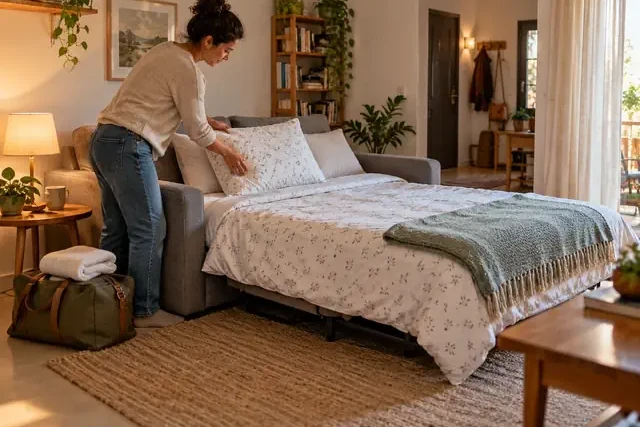
Start by checking the sleeping spot itself and the items needed to prepare it. Along with a clean cover and a surface that suits sleeping‚ you can prepare blankets for hosting guests at home to match the season and the guest's preference‚ and keep a spare one in case it is needed. The items should be easy to reach‚ so that nobody has to open cupboards in a room where someone is already asleep. Preparing in advance lets you arrange things calmly and explain to the guest what is available to them‚ without turning bedtime into a project that only starts at the end of the evening.
The Sleeping Spot in Real Use
When the sofa bed is open‚ the relationship between the pieces of furniture in the room changes. A table that usually stands in the middle may block the way‚ and a cupboard door may not open all the way. It is worth setting up the space before the visit and checking what actually happens‚ rather than relying on the dimensions of the sleeping solution. Leave a comfortable path to the door and to the other areas the guest is likely to use. If a piece of furniture has to be moved‚ choose a new spot for it in advance‚ so it does not end up in the hallway or in an area the household uses at the last minute. The length of the stay also affects the setup. For one night a short preparation is enough‚ while for a visit of several days you should think about where the bedding will be kept during the day. A sleeping spot that has to be folded and unfolded every evening needs a simple storage method and an agreement on when the room is in use. There is no need to keep the living room in bedroom mode throughout the visit‚ but switching between the two roles should be easy. That way hosting does not take over the home‚ and the guest does not feel that their presence requires a rearrangement every hour.
Privacy Even Without a Separate Door
Privacy can be created through coordination‚ not only with a partition. If the sleeping spot is in the living room‚ you can agree on the time when the room stops being used for watching TV or working. Explain in advance whether household members pass through it on the way to another room‚ and whether anything starts early in the morning. This kind of coordination lets the guest decide how to get organized and prevents surprises. The goal is not to promise full seclusion in a home without a separate room‚ but to give a clear picture of the conditions and take them into account as much as possible. If the room holds things the household will need at night or in the morning‚ move them elsewhere beforehand. A work bag‚ clothes or papers left next to the sleeping spot may mean going in and out at an awkward time. A small step before the visit can reduce that traffic. If you use a curtain or a temporary divider‚ make sure it does not block walkways or the normal use of doors. The solution should fit into the existing space‚ not create a new difficulty in an attempt to separate one area from the rest of the home.
A Corner for Personal Belongings
The guest needs a place to put down a bag‚ a phone and glasses without spreading them over the bed. A free shelf‚ a chair that is not needed at night or a small part of a table can be enough. The place should be clear and accessible‚ so the guest does not have to ask where each thing may go. If the visit lasts several days‚ you can also offer a spot for clothes and a towel. Clearing a small space for this shows consideration and lets the guest manage more independently‚ without adding a piece of furniture or a permanent storage solution to the home.
Lighting and the Route at Night
A familiar home is easy to find your way around for the people who live there‚ but not always for a guest who comes for a short stay. Show where the light switches are and how to get to the bathroom‚ and make sure the route is not blocked by bags or by furniture moved to make room for the bed. A small light next to the sleeping spot lets the guest get ready without switching on the main light. It is also worth checking whether the curtain can be closed and what the room looks like in the morning. These are simple details you can take care of before the guest arrives‚ instead of leaving them to trial and error at the hours when the rest of the home is quiet.
A Few Short Questions Before the Visit
A short conversation can prevent preparations that are not needed and reveal a need that was not taken into account. Find out when the guests plan to arrive and leave‚ how many people will stay the night and whether there is any particular preference about the sleeping arrangements. There is no need to turn the conversation into a long questionnaire or to promise to meet every request. It is better to describe honestly what the home can offer and see which simple adjustments are possible. That way both sides arrive with similar expectations‚ and the visit does not rest on assumptions nobody voiced. This check is especially useful when the visit includes children or when the arrival is planned for a late hour. The number of sleeping spots and how they are shared should be clear before the evening. The items can be prepared in advance‚ keeping the remaining tasks as short as possible. When you know what to expect‚ it is also easier to plan bathroom use and breakfast time. Planning does not take away from the spontaneity of the get-together; it simply leaves fewer technical matters for the hour when everyone would rather end the day.
A Morning That Works for Both Routines
Hosting continues after the night. Household members may leave for work while the guest is still using the main room‚ so it is worth agreeing on what happens in the morning. Setting aside the items people need outside the sleeping area can reduce disturbance‚ and agreeing on when the bed is folded lets the room return to its usual role. Simple information about the drinks and food that are available can also help the guest get going without waiting for the hosts. The goal is a morning that is comfortable for both sides‚ not copying the routine of a separate guest room into a small home.
An Easy Return to Normal Use
When the visit ends‚ put things back using a method that is easy to repeat next time. You can set aside an area for clean items and make sure things that need washing or care do not get mixed in with them. A short note on what was useful and what was missing can help‚ especially if you host often. There is no need to keep a large kit that has no place; it is better to keep the items that match your storage space and how often you have visitors. That way the next preparation is shorter‚ and hosting stays a pleasant part of home life instead of becoming a constant burden.
In Summary
Hosting overnight guests in a home without a spare room relies on planning the sleeping spot and the use of the space around it. Checking walkways‚ preparing the items‚ offering a place for personal belongings and coordinating the evening and morning hours can improve the experience without major changes to the home. An early conversation helps align expectations and identify simple needs that are easy to meet. When the return to routine is planned in advance as well‚ you can host comfortably and considerately while keeping the home running and protecting the family's own space.